Our Institution
About M S University
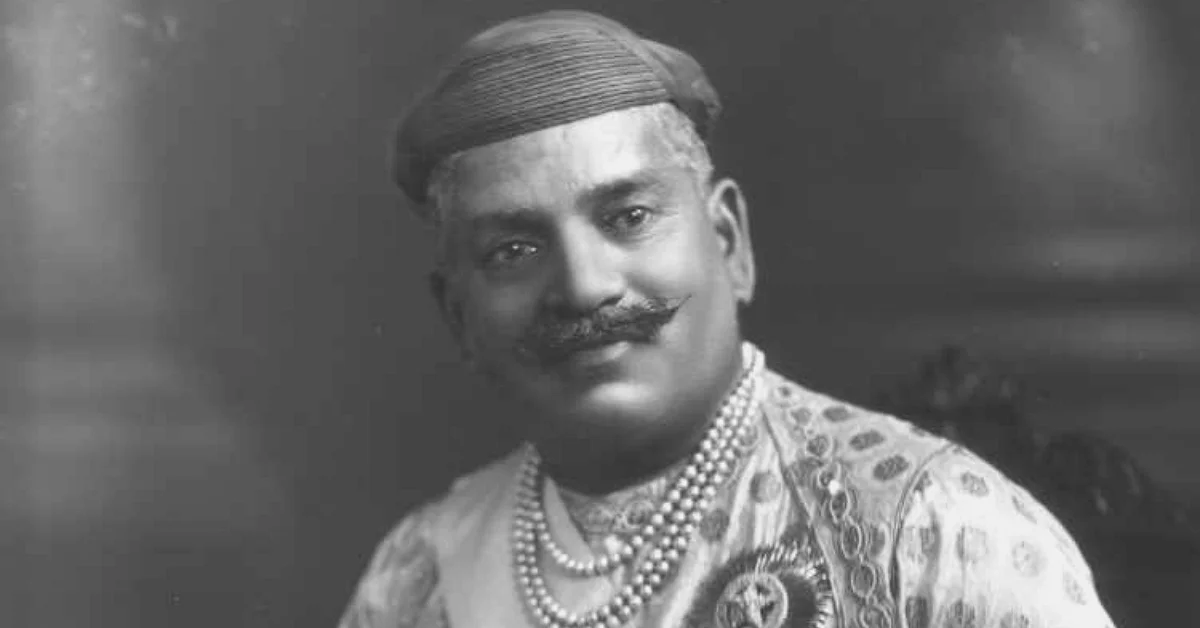
Biography of Shrimant Gopalrao Gaekwad
Sayajirao was born at Kavlana on 11th March 1863 as Shrimant Gopalrao Gaekwad, second son of Meherban Shrimant Kashirao Bhikajirao Dada Sahib Gaekwad and Ummabai. He was selected by the British Government as successor to Maharaja Malharrao Gaekwad and was accordingly adopted by Maharani Jamnabai on 27th May 1875. He ascended the gadi (throne) at Baroda on 16th June 1875, but being a minor, reigned under a Council of Regency until he came of age and was invested with full ruling powers on 28th December 1881.
During his minority he was extensively tutored in administrative skills by Raja Sir T. Madhava Rao who groomed his young protege into being a ruler with foresight and with a will to provide welfare to his people. In this period Sir T. Madhava Rao restored the State to its normal conditions from the chaos in which it was left by the predecessor of Sayajirao. Not a little credit for what the Maharaja achieved during his life in every sphere of human activity must be given to F. A. H. Elliot. The learning which Sayajirao acquired under Mr. Eliot's able guidance made him a great statesman, educator, and ruler. It is acknowledged that the Maharaja Sayajirao was a prince among the educators and an educator among the princes.
The Rules and Regulations
On assuming the reins of Government, some of his first tasks included education of his subjects, uplifting of the downtrodden, judicial, agricultural, and social reforms, building a network of railways to connect areas of his dispersed territories. He played a key role in the development of Baroda's textile industry. His educational and social reforms included, along with others, ban on child marriage, legislation of divorce, removal of untouchability, spread of education, development of Sanskrit and ideological studies, religious education, encouragement of fine arts.
Fully aware of the fact that he was a Maratha ruler of Gujarat, he identified himself with the people and developed their cosmopolitan attitude and progressive, reformist zeal. His rich library became the nucleus of today's Central Library of Baroda with a network of libraries in all the towns and villages in his state. He was the first Indian Ruler to introduce, in 1906, compulsory and free primary education in his State, placing his territory far in advance of contemporary British India.
Heritage and Views
Though a prince of a native state, an admirer of the English people and in many respects of the English rule in India, he jealously guarded his rights and status even at the cost of annoyance to the British Indian Government. He was granted the title of Farzand-I-Khas-I-Daulat-i-Inglishia on 29th December 1876. He attended the Delhi Durbars of 1877, 1903, 1911. It was at the 1911 Delhi Durbar that Sir Sayajirao did not bow to the King Emperor and this was considered disrespect to the throne by the British who almost derecognized him, and he almost lost his throne. Sayajirao was often in conflict with the British on matters of principle and governance, having continuous and longstanding verbal and written disputes with the British Residents.
Public Works
Railways
It was during his reign that a large narrow gauge railway network was set up in Baroda State which even to this day is the largest narrow gauge railway network in the world with Dabhoi at its focal point. Sayajirao envisioned a water supply scheme for Baroda in 1892 at Ajwa which would supply drinking water to the people of Baroda by gravity. To this day a large portion of Vadodara City gets its drinking water from this source.
Parks and Universities
The large public park originally called Kamati Baug and now called Sayaji Baug were his gift to the City of Baroda. On his Diamond Jubilee of accession to the throne, he set apart large funds out of his personal as well as the state funds for setting up a University in Baroda for the benefit of students from the rural areas of his state, a task which was ultimately completed by his grandson Sir Pratapsinghrao Gaekwad who founded the Maharaja Sayajirao University and settled the trust as desired by his grandfather.
This Trust known as Sir Sayajirao Diamond Jubilee and Memorial Trust exists today also and caters to the educational and other needs of the people of the former state of Baroda.
Origin and History
The idea of establishing a University at Baroda had engaged the attention of the Government of the former State of Baroda and its educational advisors long before the question of regional universities and decentralization, reorganization and reconditioning of higher education to suit the cultural educational needs of areas had taken root in the country. The concept was first visualized by Dr. Jackson, when, as Principal of the Baroda College in the 1908, he advocated the establishment of a Science Institute at Baroda on an improved and independent basis.
It was a consistent policy of the Government of Baroda to subject its educational system to periodical inquiries of an exploratory nature by educational experts of international fame, because of which the first Commission was appointed in 1909. The principal recommendation of that Commission was to expand the activities of the Baroda College by establishing additional chairs in new branches of knowledge. As a result of this policy of chalking out untrodden paths in higher education and thereby evolving a university atmosphere in Baroda, chairs of Comparative Region and Household Science were instituted. Prof. Widgery and Mrs. Strong were appointed to hold these chairs.
In 1916, the educational policy of the State was again reviewed. As a part of this inquiry, one of the members of the Commission, Shri S. V. Mukerjea, prepared minutes of recommendations and in his note, he advocated the establishment of a University at Baroda. In 1919 the matter was brought to the forefront by the appointment of yet another Committee consisting of the late Principal Clarke, Prof. Widgery and Shri N. K. Dixit, the then Educational Commissioner of the State.
The Committee drew up an elaborate report in favor of civic University at Baroda. Thereafter, Prof. P. Sheshadri of the Benares Hindu University was requested to lay out a scheme for a University at Baroda. Prof. Widgery also submitted a scheme for a State University on the lines of the smaller German Universities. During this period, Her Highness Shrimant Maharani Chimnabai Saheb, the Maharani Gaekwad of Baroda, offered a princely donation for running a Women's University at Baroda. But as Sir Manubhai Mehta, the then Dewan of Baroda, pointed out in one of his speeches,
"The time was not ripe then for idea to germinate."
The Rules and Regulations
The university has its origins in the Baroda College, established in 1881 by Baroda State. The main building, which houses the Faculty of Arts, was designed by Robert Fellowes Chisholm in Indo-Saracenic architecture style, in a fusion of Indian and Byzantine arches and domes in brick and polychromed stone. The main dome on the convocation hall was modelled after the great dome of the Gol Gumbaz in Bijapur.
Pratap Singh Gaekwad of Baroda (1908–1968) (the last Maharaja of the erstwhile Baroda State) founded The Maharaja Sayajirao University of Baroda in 1949 on the wishes of his grandfather, Maharaja Sayajirao Gaekwad III (1863–1939), and settled the Sir Sayajirao Diamond jubilee and Memorial Trust, which exists to date, catering to the education and other needs of the people of the former Baroda State.
The development of the University may be divided into two phases:
| Phase | College Name | Since |
|---|---|---|
| 1st Phase | Baroda College | 1881 to 1949 |
| 2nd Phase | The Maharaja Sayajirao University of Baroda | 1949 Onwards |
Commission of 1927
In the year 1925, the Setalvad Committee on the University Reform in the Province of Bombay published their report. The Committee recommended the idea of regional Universities in the Province of Bombay, stressed the importance of more direct teaching, at least as far as the post-graduate teaching by the Universities was concerned, and stressed the need for paying for greater attention to the study of technology and carrying on research in the various branches of knowledge.
The Committee, through it proposed the idea of having regional Universities into which the province could be divided viz., Maharashtra, Gujarat, Karnataka, and Sind, recommended that a University for only one region viz. Maharashtra be established, at an early date. According to them, the rest of the areas were not so developed then as to have a separate university. Dr. M.R.Jaykar and Prof. K.T. Shah two of the members of the Committee, had appended notes of dissent stating that Gujarat could definitely be considered ripe for a separate University.
This led to a movement for a separate university for Gujarat. Just about the time when the cry for the establishment of separate regional Universities was raised, the celebration of the golden jubilee of the His Highness the late Maharaja Sir Sayajirao Gaekwad were afoot in the Baroda State and the people of the State also showed keen interest in establishing a University at Baroda as a fitting monument to commemorate the beneficent region of the illustrious ruler.
This resulted in the appointment of the Baroda University Commission on the 24th of September 1926, with Prof. A. G. Widgery as Chairman, and the following members: Shri K.M.Munshi, Principal A.B.Dhriva, Prof. K.G.Naik, Shri S.V.Mukerjea.
The Commission submitted in 1927 a comprehensive report making out a strong case for the immediate establishment of a University at Baroda. The principal recommendation of the that Commission were:
- •A separate University at Baroda called "Shri Sayajirao University of Baroda" be established.
- •The University should be of Unitary and residential type with facilities for affiliation of college outside the city.
- •The first two years of colleges were proposed to be reformed and constituted into a Preparatory College for Men and Women (Preparatory College for Women).
Circumstances, however, did not permit the establishment of a seperate University in 1927, but the growth of the university idea continued unabated. Several institutions for higher education were added during the two decades that followed.